
Via Lauretana: from Assisi to Loreto - Cammini d'Umbria

The via Lauretana
Marching through nature and spirit, travelling through an open-air museum of places, artistic treasures and landscapes.
The via Lauretana
The Via Lauretana connects two “monumental” pilgrimage destinations: Assisi and Loreto
and is part of an ancient route that led all the way to Rome: the faithful travelled it to visit the Sanctuary of the Holy House of Mary in the town in the Marche region. More than a path, it is an open-air museum of places, routes and memories, 150 kilometres long in total, divided into seven stages, and characterised by splendid landscapes.
Umbria is the first two stages of the walk: from Assisi, a marvellous pearl of spirituality, the itinerary skirts the abbey of San Benedetto al Subasio and reaches Spello, offering a beautiful and unexpected view from above of what is considered one of the most beautiful villages in Italy. The trail continues along the hills of Spello and climbs up to cross the Apennines, through cultivated areas, woods and high pastures, culminating near the Colfiorito marshland, which is an area of exceptional environmental interest and part of the Natural Park of the same name. Finally, the itinerary says goodbye to Umbria as it heads towards the Marche region through an area with little human activity, which means that we walk mainly on dirt roads and paths.
VIEW DETAILS ON KOMOOT
👉 Discover more about the trail
Pay attention to the trail, as it’s not always clearly marked. Restoration works are underway to install wooden trail markers and informational totems for better orientation.
Surface: Dirt road
Signage: Wooden trail markers and totems with detailed information about the route, enriched with historical and cultural insights about the area.
The itinerary begins in the town of Assisi, starting at the Basilica of St. Francis. Passing through the historic center, it leads to the Basilica di Santa Chiara (Basilica of St. Clare), then to Porta Nuova, from where the town is left behind.
Located in the heart of the UNESCO World Heritage site of Assisi, the route offers unmissable landmarks, including the two Basilicas (St. Francis and St. Clare), the Cathedral of San Rufino, and, in the central Piazza del Comune, the Palazzo dei Priori (Palace of the Priors), the Palazzo del Capitano del Popolo (Captain of the People’s Palace), and the Temple of Minerva.
Leaving the town via Porta Nuova, the route follows Provincial Road 147 of San Benedetto.
A 3 km detour allows visitors to reach the Abbey of San Benedetto al Subasio.
The main path continues over approximately 10 km, taking about 3 hours, with a maximum ascent of 210 meters.The trail provides stunning views of the slopes of Mount Subasio, surrounded by coppice woods and olive groves. Along the way, it alternates between paved and dirt roads.
It follows Via Borghettaccio and Via Fonte l’Abate. At the junction with Via Fosso di San Bernardo, the path takes the dirt road towards Via Renaro, merging into Via degli Ulivi.
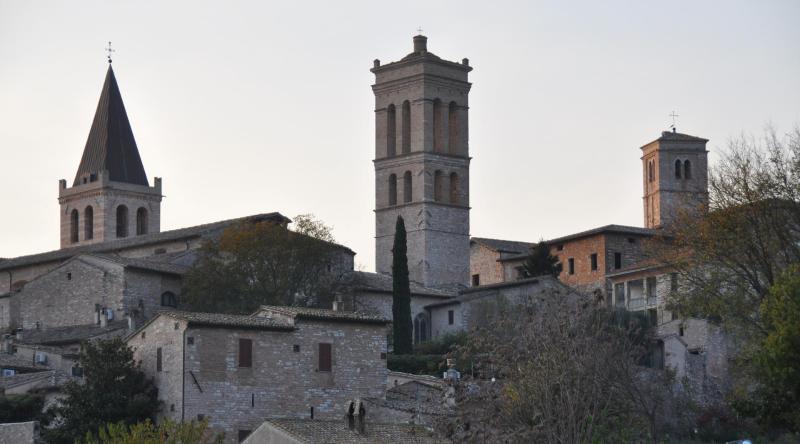
The final stretch, about 3 km long, skirts Mount Subasio and leads to Spello. The picturesque village is entered through Porta Montanara.
Before departing, consult detailed information available on the official website and app for the Via Lauretana pilgrimage routes: https://camminilauretani.eu.
Pay attention to the trail, as it’s not always clearly marked. Restoration works are underway to install wooden trail markers and informational totems for better orientation.
Surface: Dirt road.
Signage: Wooden trail markers and totems with detailed information about the route, enriched with historical and cultural insights about the area.
The second stage, ideal for experienced hikers, is a demanding route of about 29 km, requiring eight hours of walking and involving an elevation gain of about 900 meters.
Spello, he starting point, is worth a visit for its Roman and medieval remains and its artistic heritage, such as the Chiesa di Santa Maria Maggiore. Leaving the historic center through Via Brodolini, the route continues on dirt roads and less-traveled trails climbing into the Apennines.
Before beginning the ascent, a detour leads to Foligno, another town worth exploring, where you can visit landmarks like the Cattedrale di San Feliciano.
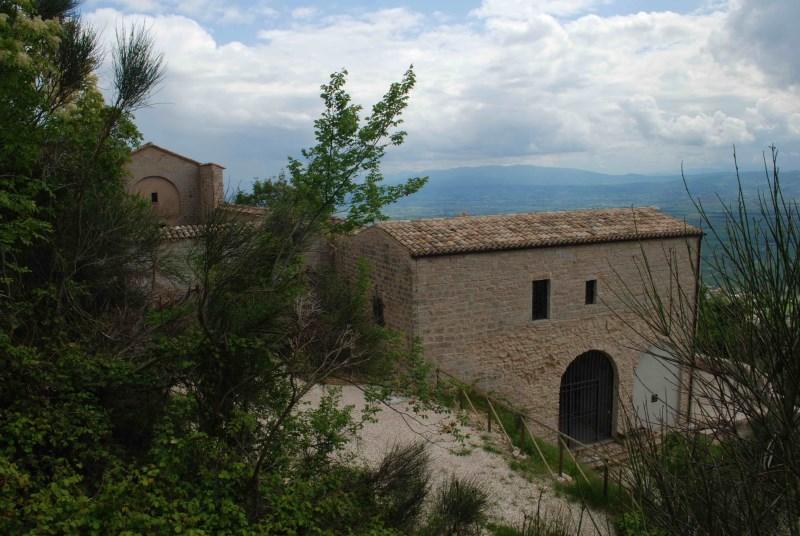
The effort is rewarded with breathtaking views: from the Spoleto Valley to Spello’s hills. The route passes through the quaint village of Treggio and, shortly before Pale, a short detour allows for a visit to the hermitage of Santa Maria di Giacobbe. Continuing, the route traverses cultivated fields, lush forests, and highland pastures, culminating at the Colfiorito Marsh, a treasure trove of biodiversity and natural beauty
Before completing the stage, a stop at the Church of Santa Maria di Plestia is highly recommended. This example of proto-Romanesque architecture straddles the border between Umbria and Marche, with the church building located in Serravalle di Chienti and its churchyard belonging to Foligno.
Before departing, consult detailed information available on the official website and app for the Via Lauretana pilgrimage routes: https://camminilauretani.eu/
Elevation gain
+1200 m | - 760 m
Distance
41,2 km
Duration
11 h 56 m