


Coup de cœur

Spello
“The most elegant”
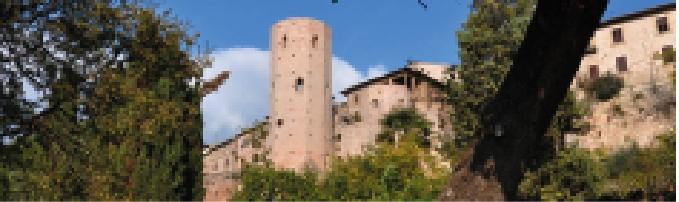
On the slopes of Mount Subasio, Spello is a village that has made everyday beauty an art. The Roman walls embrace a historic centre where every window is a hanging garden, every balcony a burst of geraniums and petunias. Here elegance is not ostentation but discreet care: the alleys are immaculate, the ancient stones well maintained, and even the Vicolo del Bacio invites a romantic suspension of time. In June, during Corpus Domini, the entire village is covered with floral carpets—ephemeral masterpieces created with fresh petals according to a centuries-old tradition.
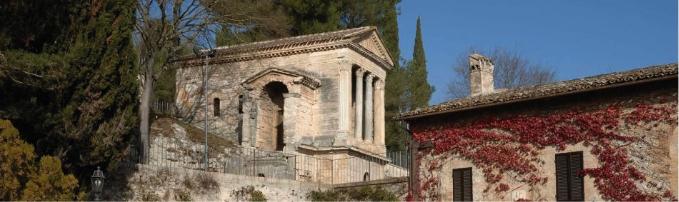
Coup de cœur: getting lost in the maze of flower-filled alleys until you come across the Baglioni Chapel by Pinturicchio, where the Annunciation preserves one of the most precious secrets of the Umbrian Renaissance, and then being surprised, just outside the walls, by the polychrome mosaics of the Roman villa, a testament to a Spello that once stood at the crossroads of empires.

Todi
“The most theatrical”
Todi rises on a hill overlooking the Tiber Valley, and legend tells that it was an eagle that indicated its summit. To arrive here is to discover a city that has preserved its medieval structure intact, with three concentric rings of walls—Etruscan, Roman, medieval—that recount centuries of history. The heart is Piazza del Popolo, one of the most harmonious civic complexes in Italy, where the Cathedral, the Palazzo del Capitano and the Palazzo dei Priori face each other with the solemnity of a Renaissance stage. At the foot of the hill, the Beverly Pepper Sculpture Park hosts monumental works that interact with the Umbrian landscape, a meeting of contemporary art and nature that transforms the countryside into an open-air museum.
Coup de cœur: climbing up to the Church of San Fortunato, where Jacopone da Todi rests, and looking out from the fortress to embrace the whole of Umbria—the same panorama that inspired the mystic poet and, centuries later, Gabriele D’Annunzio, who described Todi as a city that “flew from the Tiber onto the hill.

Campello sul Clitunno
“The sanctuary of poets”
Campello owes its fame to the Clitunno, the small river sung by Virgil, Propertius and Carducci, whose crystal-clear waters emerge from underground into a turquoise pool among weeping willows and cypresses. The Clitunno Springs Park is a place of almost unreal peace, where swans and ducks move in a silence broken only by the dripping of water. A short distance away, the Lombard temple — a UNESCO World Heritage Site — stands on an ancient Roman place of worship, while above rises the fortified village of Campello Alto, with its intact walls and the church of San Donato.
Coup de cœur: sitting on the banks of the Clitunno at golden hour, when light filters through the willows and the water becomes a mirror of reflections, understanding why Latin poets considered it a sacred place.

Città della Pieve
“The most authentic”
In the far south of Umbria, on the border with Tuscany, Città della Pieve preserves a reserved and authentic character. It is the birthplace of Perugino, and the artist left here some of his most intimate works, such as the Adoration of the Magi in the church of Santa Maria dei Bianchi. The village develops on a hill with narrow and steep streets, brick houses and sudden views of the surrounding countryside dotted with cypress trees. People do not come here primarily for famous monuments, but to breathe a genuine atmosphere made of artisan workshops, wineries producing fine wines and a cuisine rooted in the land.
Coup de cœur: getting lost in the Casalino district, where houses crowd into a labyrinth of arches and passages that seem suspended in an ancient world still intact. From the ancient Roman well of Casalino, a clear and abundant spring still flows.

Vallo di Nera
“The most secret”
Perched on a hill in the Valnerina valley, Vallo di Nera is one of the most authentic and least visited villages in Umbria. The stone houses lean against each other, the streets are narrow, sometimes covered by arches that create patterns of light and shadow. Three Romanesque churches hold surprising artistic treasures. Around the village, the valley features oak and chestnut woods, paths that follow the Nera river, and an agricultural tradition that has made its cheeses famous, including salted ricotta produced using traditional methods. Here time flows slowly, and hospitality is the authentic kind found in borderlands.
Coup de cœur: after a hike in the surrounding woods, stop at a trattoria for a lentil soup, salted ricotta and a glass of red wine, listening to the stories of local shepherds.